
What is X-ray non-destructive testing? Why is it becoming increasingly indispensable in the industrial sector?
I. What is X-ray Non-Destructive Testing (X-ray NDT)?
X-ray Non-destructive Testing (X-ray NDT) is an inspection technology that uses X-rays to penetrate objects and forms images of internal structures based on the differences in X-ray absorption among different materials.
Since materials vary in density, thickness, and internal structure, X-rays undergo varying degrees of attenuation during penetration, resulting in grayscale contrast in the imaging system:
-
High-density or thicker areas produce significant grayscale differences
-
Defects such as voids, cracks, and bubbles present abnormal image features
-
Foreign objects and normal structures also generate recognizable contrast differences
Through these grayscale variations, the system enables internal quality inspection and defect analysis without damaging the product structure.
II. Core Principles of X-ray Inspection
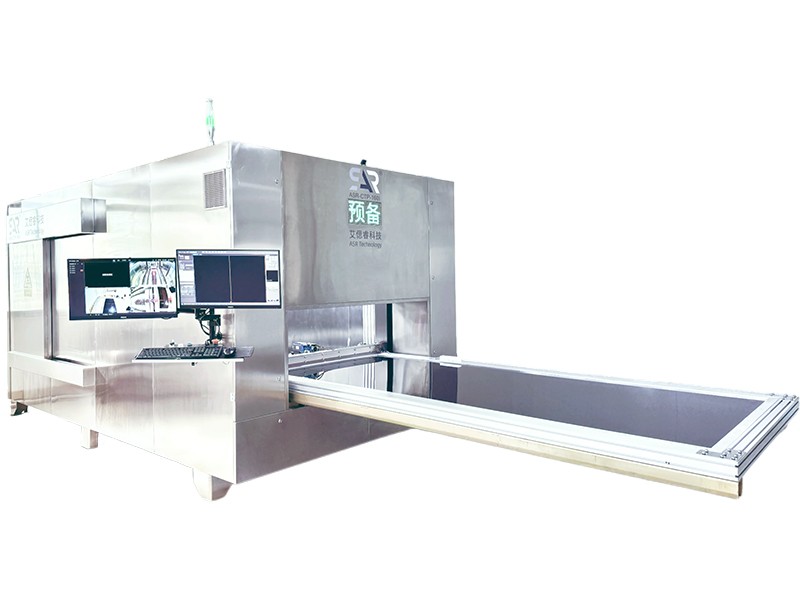
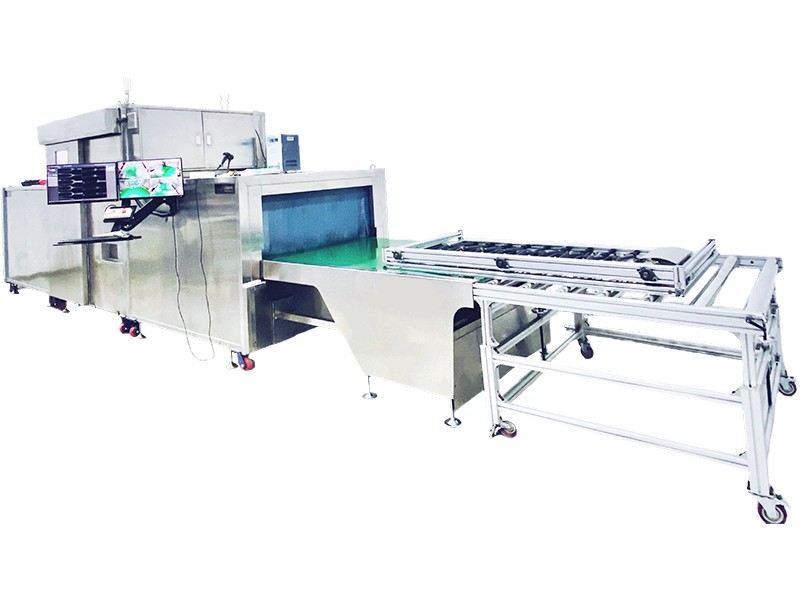
An X-ray inspection system typically consists of the following components:
-
X-ray generator (produces X-rays)
-
Conveyor system (transports the inspected objects)
-
Detector (receives transmitted signals)
-
Image processing system (generates and analyzes images)
The basic process is:
-
X-rays penetrate the product
-
Different materials absorb different amounts of energy
-
The detector converts signals into digital images
-
Software performs defect identification and analysis
The final output is a visual image of the internal structure.
III. What Problems Can X-ray NDT Detect?
1. Food Industry
In food foreign object inspection, it can identify:
-
Metal contaminants
-
Glass fragments
-
Stones
-
Bones (chicken bones, fish bones, etc.)
-
High-density plastics
It can also detect:
-
Missing components
-
Packaging damage
-
Product weight anomalies (trend analysis)
2. Industrial Manufacturing
Common defects in industrial product inspection include:
-
Welding porosity
-
Internal cracks
-
Voids and shrinkage
-
Structural misalignment
-
Broken wires or delamination
3. New Energy Battery Industry
In lithium battery inspection, X-ray can be used for:
-
Electrode alignment detection
-
Weld quality analysis
-
Internal bubble identification
-
Cell structure inspection
These defects directly affect battery safety and consistency.
4. Composite Materials and Aerospace
For materials such as carbon fiber, X-ray can detect:
-
Delamination defects
-
Resin inhomogeneity
-
Internal porosity
-
Structural damage
IV. What Is the Difference Between DR and CT Inspection?
X-ray inspection is generally divided into two types: DR and CT.
DR (Digital Radiography)
-
2D projection imaging
-
Fast inspection speed
-
Suitable for online inspection
-
Widely used in food and industrial production lines
CT (Computed Tomography)
-
3D structural reconstruction
-
Multi-angle internal observation
-
Higher precision
-
Commonly used for R&D and advanced analysis
In simple terms:
👉 DR tends toward "rapid screening"
👉 CT tends toward "in-depth analysis"
V. Why Is X-ray NDT Becoming Increasingly Important?
As manufacturing advances, traditional manual inspection is being gradually replaced, mainly due to:
-
Products are becoming more complex — Modern products have highly integrated internal structures that are invisible to the naked eye.
-
Quality requirements are rising — Food safety, battery safety, and aviation safety all demand zero-defect management.
-
Automated production is widespread — Production lines require:
- 100% online inspection
- Real-time feedback
- Automatic rejection
- Data traceability
X-ray inspection precisely meets these demands.
VI. Intelligent Trends in X-ray Inspection (AI + X-ray)
In recent years, AI technology has been deeply integrating into X-ray inspection systems, mainly in:
-
Automatic defect recognition
-
Reduced false rejection rates
-
Improved inspection consistency
-
Automatic defect classification
-
Support for big data analytics
In the future, X-ray inspection will evolve from an "imaging tool" to an "intelligent quality decision-making system."
VII. Industry Development Trends
The future of X-ray NDT will feature the following trends:
-
Widespread adoption of AI-based intelligent inspection
-
Online industrial CT
-
High-speed, high-resolution imaging
-
Cloud-based data management
-
Full integration with smart factories
X-ray inspection is becoming a core component of intelligent manufacturing systems.
Conclusion
X-ray non-destructive testing is not merely an inspection technique but also an essential infrastructure for quality control in modern industry. From food safety to new energy batteries, from industrial manufacturing to aerospace, its applications continue to expand.
With the advancement of AI and automation technologies, X-ray inspection is entering a new phase that is smarter, more efficient, and more precise.